Your office is in Chicago. The charging property is in Kentucky.
The operator may be in another state. The electrician is local. The property manager is on site. Where does the complete property record live?
DockYard + Atlas
You already have the chargers, operators, vendors, and property team. DockYard puts the operation around them together and Atlas keeps it organized.
Give us one property. DockYard sets it up. Atlas keeps it together.
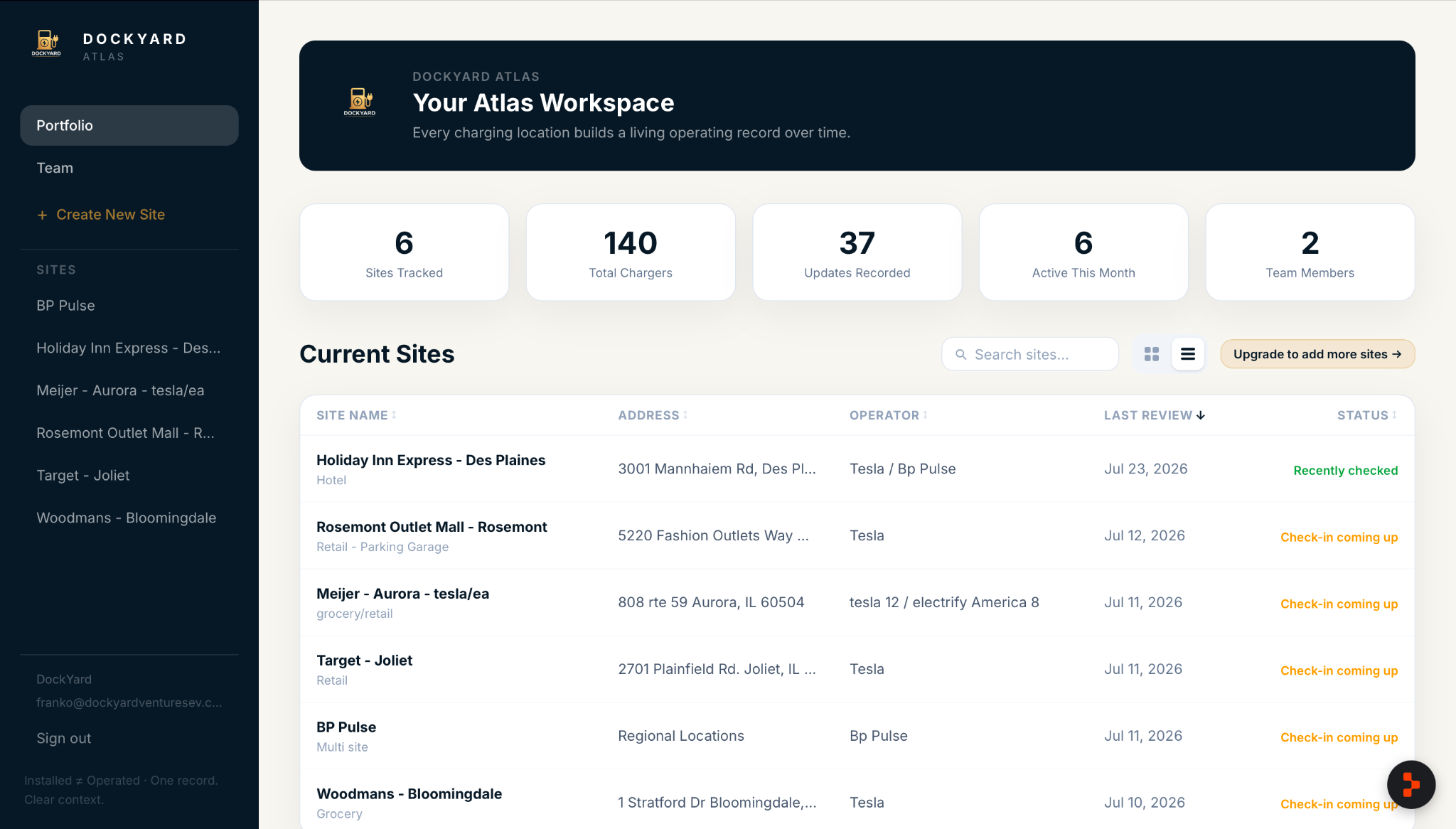
The industry built systems around the charger. We built one around the property it lives on.
The overlooked part
A live charging property can involve a property manager, charging operator, installer, electrical contractor, service vendors, and corporate ownership. They may all know one part of the site. Who keeps the whole property together?
The operator may be in another state. The electrician is local. The property manager is on site. Where does the complete property record live?
Contacts, vendors, service history, current photos, and previous work should stay with the property, not leave with a person.
Do they know who worked on it last time, what the property looks like today, and who they are meeting when they arrive?
Parking, signage, construction, lighting, access, and other property conditions can affect the charging experience without appearing in charger data.
One location uses email. Another uses a spreadsheet. Another relies on one facilities manager. DockYard gives the portfolio one repeatable operating structure.
Use ours
DockYard does the setup so your team does not have to invent and maintain another process.
Start with the address, charging operator, property contact, and whatever records you already have.
Charging equipment, parking, access, signage, current conditions, and current photos.
Property contacts, charging operator, vendors, service companies, and responsibilities.
Documents, warranties when available, previous work, service history, and what is still missing.
The property gets an organized operating record your team can actually use.
When people, vendors, site conditions, and work change, the property record changes with them.
Inside Atlas
Atlas is where the property lives after DockYard sets it up. No empty workspace. No asking your team to figure out what belongs where.
See your active properties, current activity, and site context across the portfolio without relying on every location to create its own process.
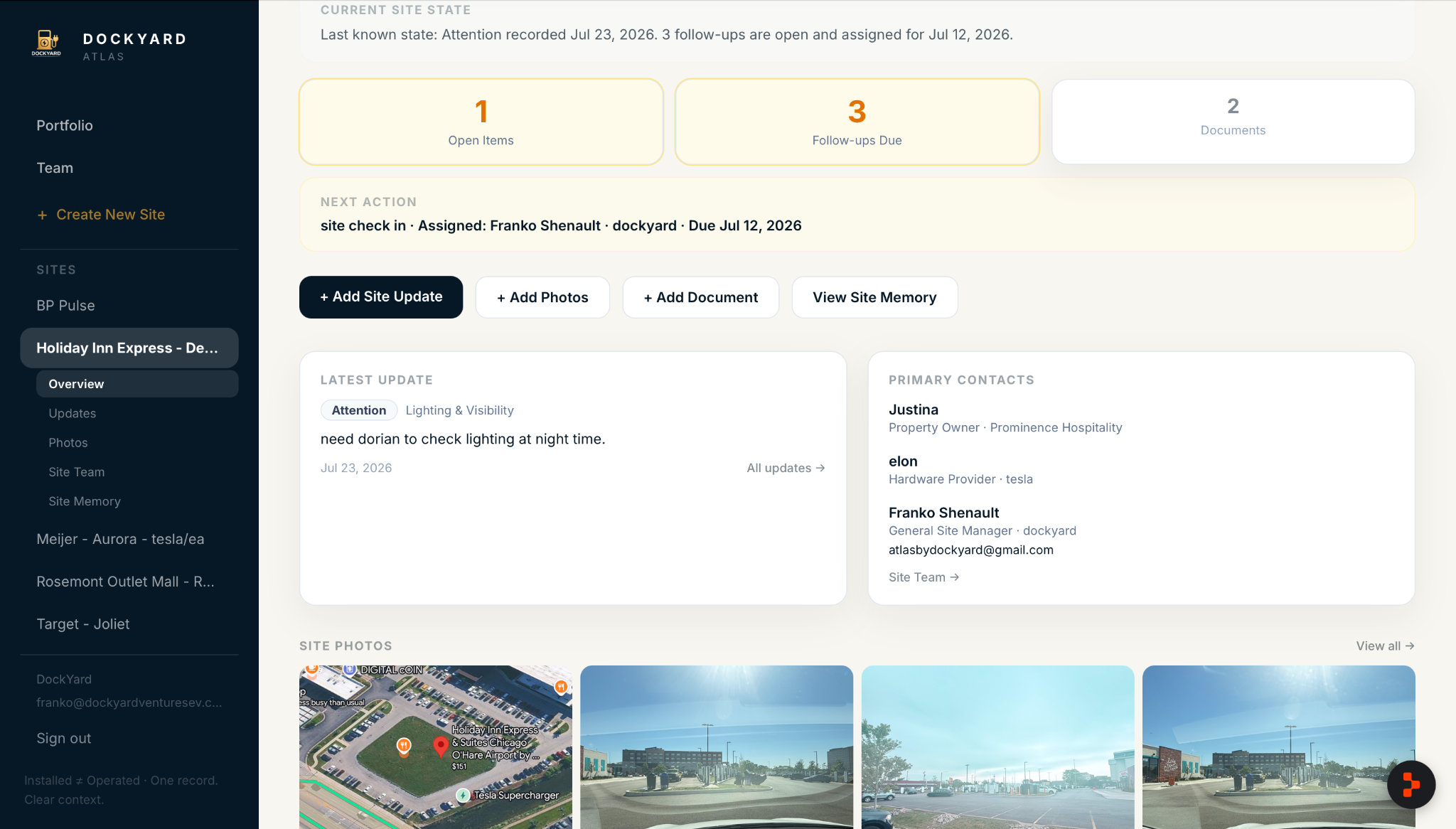
Current site information, charging equipment, contacts, vendors, photos, records, and property history stay connected to the location.
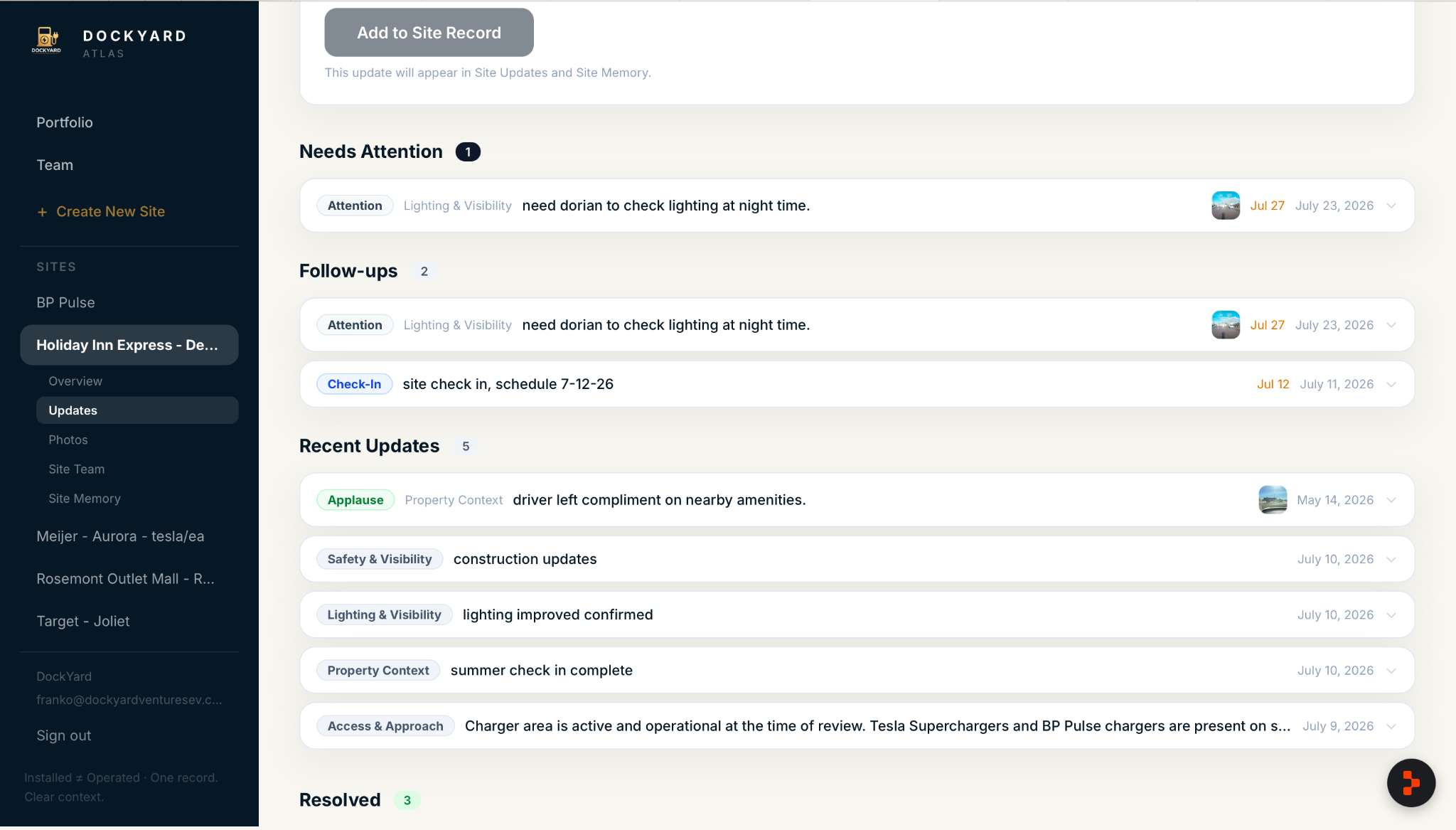
When something needs attention, the update stays connected to the site, the people involved, and the property history.
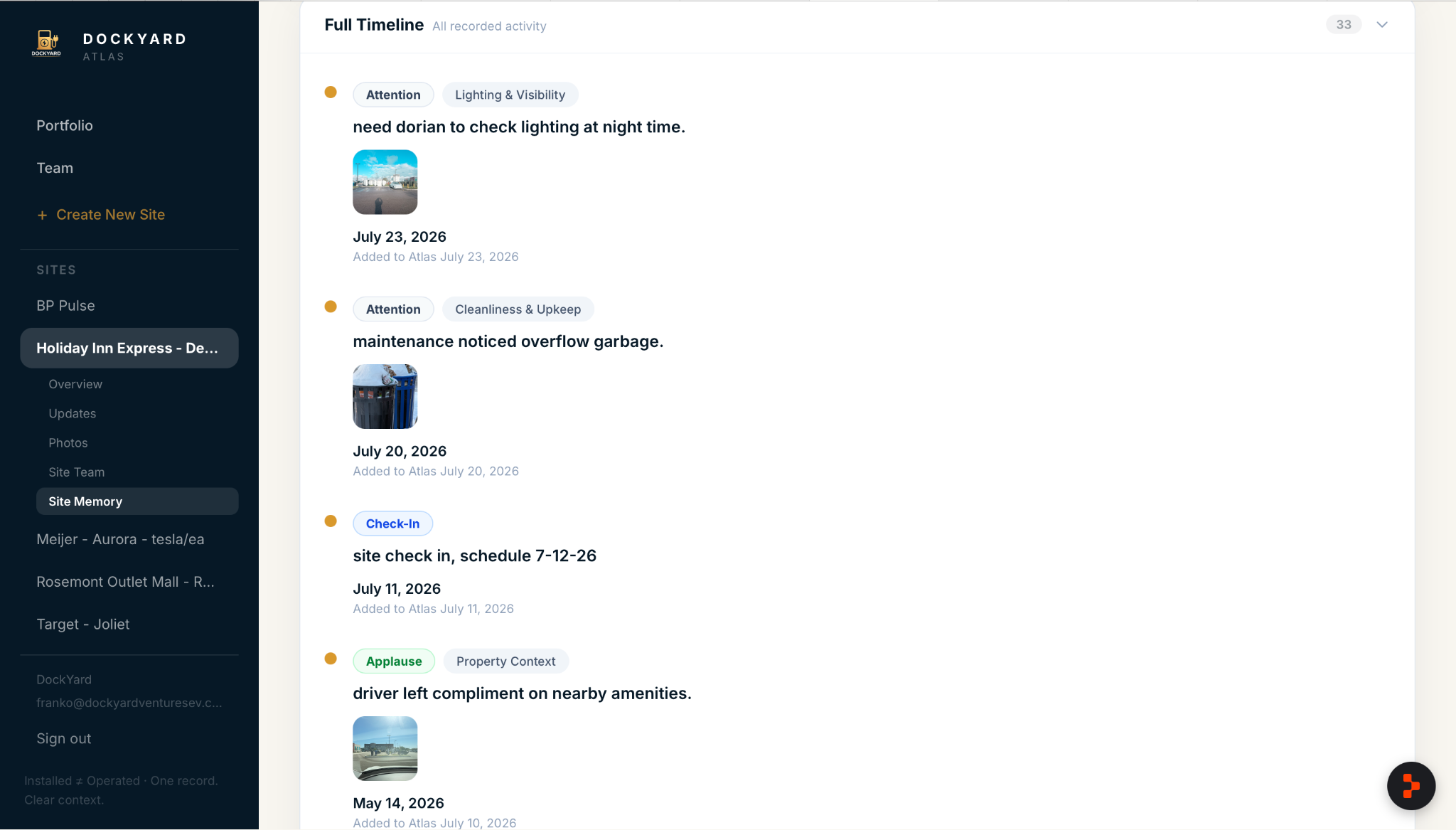
New managers, vendors, and service providers can see what came before instead of piecing the site together again.
DockYard
Software alone would still leave your team with work. DockYard removes that work by documenting the property, organizing the people and records around the chargers, and establishing the property inside Atlas.

Atlas
Atlas gives the people responsible for the property an organized place for the information DockYard establishes and maintains.
Who it's for
Different teams use Atlas differently. The common problem is the same: somebody has to keep the property organized around the chargers.
Know the people, vendors, records, and property history surrounding each charging location.
Give current and future managers an established property record.
Support the property relationship without building another property-operations team internally.
Help technicians and service teams understand the location and relevant history before the next visit.
Start simple
You do not need to move an entire portfolio into Atlas to find out whether it works. Start with one real charging property. DockYard sets it up. Your team uses it. Then decide what comes next.
Ready when you are
Give DockYard one charging property. We'll document it, organize the people and records around it, and build it in Atlas.
First property activation: $2,500. You manage the property. We'll organize the charging operation around it.